

Finding the right images for your blog posts can be a real pain. To complicate matters even more, bloggers need to ensure that they only use free and creative common images. This greatly restricts the quality and quantity of images they can use, however using stock images without permission is a risky affair as stock image companies frequently target websites who have used their images illegally.
The days of bloggers having to use low quality free images or paying for high quality images, could soon be at an end.
Yesterday, Getty Images announced that they will offer over thirty five million high quality images to bloggers free of charge.
Technically, you are not getting the images free. You will not own the images or have rights to using them in other formats. What they do is allow you to embed the image on your website using shortcode. The image is placed inside a frame and includes a link back to their website.
The decision to offer so many images in this way seems to come from the fact that millions of bloggers were using the photos illegally. With this new setup, Getty Images will generate millions of links back to their service. It seems like a smart move. Bloggers have never generated them a lot of money. Their main income comes from newspapers and televisions companies.
My guess is that they will see a slight drop in income, but this will be offset by a significant increase in traffic.
The embed option can be viewed underneath images next to the Twitter and Tumblr share buttons.
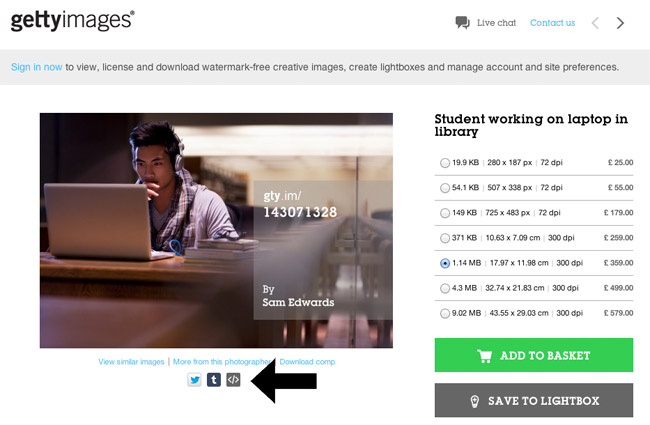
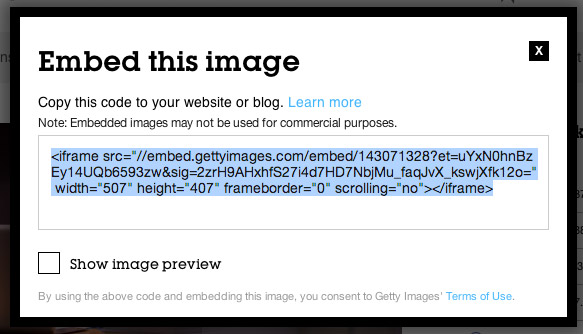
Clicking on the button will display the code that you need to add to your website.
And this is what the image will look like when you embed it on your website.
As you can see, the Getty Images logo is prominent, however I was surprised that the logo is not a link. Instead, the image itself links to the page on Getty Images where you can purchase it.
There is also an option for visitors to share the image using Twitter and Tumbler. The embed code can also be copied here too. The dimensions of the image can easily be changed by modifying the width and height attributes.
I would have liked the Getty Images branding to be a little less prominent and the option to remove the sharing options from the image. I would also have like to see an option to change the alignment of the image so that an image can be centred or aligned to the right.
It remains to be seen how bloggers will respond to this new feature of Getty Images. Will it cut down on copyrighted images being used illegally? Perhaps not, though bloggers do have a legal way of displaying high quality images on their website.
I recommend trying the feature out yourself by browsing Getty Images and embedding a photograph you like into one of your articles.
As always, I would love to hear your thoughts on this :)
Kevin
I every time emiled this weblog post page to all my contacts, for the reason that if like to read it
then my links will too.
What a data of un-ambiguity and preserveness of valuable familiarity regarding unpredicted feelings.
40d56a248cc812696e3e9305442699ea
I know right. If people are selling photos or designs, I think they would do best to avoid those sites with murky terms of service or just contact support to be on the safe side for for licensing information. I’m sure there will most likely be exceptions to whatever terms are set in place on any website.
Thanks for clarifying that Noble. I got lost in all the ambiguous jargon that license terms and conditions use.
I’d prefer if they gave a dumbed down version. It sounds silly, but I think it would be better. For example, it could say: If you own a blog, you do not need to pay, if you are selling merchandise, you need to choose option X, etc.
:)
Great Find, Kevin. Thanks. I like putting photos with my text on websites and social media to make the posts more visually appealing and to encourage engagement. I’ve read about studies online showing that adding photos to your posts increases engagement on social media sites like Facebook and Twitter. It is always great to find more sites offering high-quality images for free use on websites and blogs.
Also, adding to the commercial purposes from a previous comment on this post, Many sites define commercial use also as the actual sale of their photo. I think Getty Images classifies using their images commercially to sell their photos under the term “merchandising”. If you plan to use their images to add them to merchandise like print-on-demand t-shirts, mugs, caps, etc., and sell them, then most, if not all photo sites consider that commercial purposes. Also, if you create a derivative work from the images and sell them, then some sites would consider that to be commercial use. It all depends on their terms of use. Maybe if they make their terms a little more detailed, then it will be less ambiguous. I think people who sale images or sell designs derived from images should avoid using images from sites with terms of use like that or just obtain the license (if a commercial license is available) if they really want to sell the images or derivatives from the images to keep things simple.
Thanks again for the post. You always bring valuable content.
Cheers
Blogs that draw revenues from Google Ads will still be able to use the Getty Images embed player at no cost. “We would not consider this commercial use,” says Peters. “The fact today that a website is generating revenue would not limit the use of the embed. What would limit that use is if they used our imagery to promote a service, a product or their business. They would need to get a license.” A spokeswoman for Getty Images confirms to BJP that editorial websites, from The New York Times to Buzzfeed, will also be able to use the embed feature as long as images are used in an editorial context.
Source – http://www.bjp-online.com/2014/03/getty-images-makes-35-million-images-free-in-fight-against-copyright-infringement/
This is the part that is a bit ambiguous and open to interpretation. It sounds like it means that you cannot use it for advertising purposes, though placing it on a website with advertisements is allowed. But then again, perhaps that’s not what it means.
What I Learn From This = You can use it kevin
Embedded Viewer
Where enabled, you may embed Getty Images Content on a website, blog or social media platform using the embedded viewer (the “Embedded Viewer”). Not all Getty Images Content will be available for embedded use, and availability may change without notice. Getty Images reserves the right in its sole discretion to remove Getty Images Content from the Embedded Viewer. Upon request, you agree to take prompt action to stop using the Embedded Viewer and/or Getty Images Content. You may only use embedded Getty Images Content for editorial purposes (meaning relating to events that are newsworthy or of public interest). Embedded Getty Images Content may not be used: (a) for any commercial purpose (for example, in advertising, promotions or merchandising) or to suggest endorsement or sponsorship; (b) in violation of any stated restriction; (c) in a defamatory, pornographic or otherwise unlawful manner; or (d) outside of the context of the Embedded Viewer.
Getty Images (or third parties acting on its behalf) may collect data related to use of the Embedded Viewer and embedded Getty Images Content, and reserves the right to place advertisements in the Embedded Viewer or otherwise monetise its use without any compensation to you.
I sent them an email today to ask for clarification about this.
They responded in a few minutes with:
I responded to them and pointed out that they did not actually read my email and asked them to clarify. This was their response:
Either their customer service is handled by a bot, or their staff just do not care about queries of this nature and simply want to close the ticket. I have saved the emails as evidence that I was not trying to steal any images (just incase!).
I do believe that the rights of photographers need to be protected, however I am not a fan of the aggressive tacts that stock image companies use to go after small blogs and business owners.
Kevin
It’s true the line is blurry but at least in my non-professional opinion your blog is quite certainly commercial. You sell your own services on it and even share your income reports of how much you earn with the site. At least in Germany even the intent to earn money (while you still might be actually losing it) is generally already considered commercial.
And yes, you are right however: While I would not always count on common sense when lawyers are involved they would probably not go after you for this image since you are only sharing the news and giving Getty exposure.
That’s a pain to hear.
I’ve always found the line between commercial and non-commercial purposes a bit blurry. The only advertisement on this blog is a banner for Rise Forums – which is my own website. Is a freelance blogger who advertises his rates classed as commercial, is a personal blogger who recommends visiting his friends store classed as commercial?
I would hope that common sense would prevail in this instance and they would see that I have embedded an image to highlight the news about their service, rather than to use any images illegally.
Kevin
Getty allows the use of their embedded images for non-commercial purposes only! That renders them useless for 90%+ of bloggers. Basically as soon as you have ads on your blog or sell services it is or at least could be considered commercial.
Because of that you should consider removing the image you have embedded above Kevin. Getty has been keeiping a lot of lawyers busy and I doubt that will change with their new embed feature.
The title of the businessweek article regarding the new embed sums it up very fittingly: “Since It Can’t Sue Us All, Getty Images Embraces Embedded Photos”
http://www.businessweek.com/articles/2014-03-06/since-it-cant-sue-us-all-getty-images-embraces-embedded-photos