
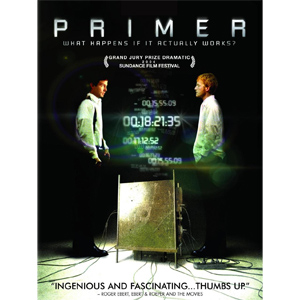
I love films that make you think after you have watched them. Films that have you thinking about them for days after (I’m not talking about M. Night Shyamalan films which have an obvious twist at the end).
One of my favourite films over the last ten years is an independent film called Primer. The film focuses around two friends who are working on a device that will reduce the weight of items, however they accidentally create a machine that allows them to travel back in time. It is a fascinating film that demands a second watch…and a third. Anyone who says they understand the film after one viewing is a liar.
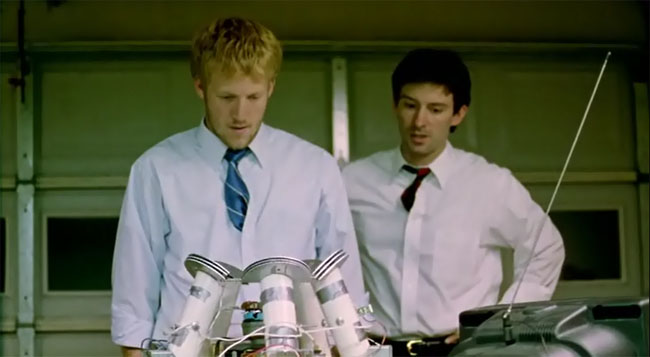
The film was written, directed, and produced, by Shane Carruth, one of the two main stars in the film. At the age of 30 he quit his job as an engineer to make Primer. I have nothing but respect for him for quitting his job and following his dreams. Amazingly, he completed the film on a budget of only $7,000 (nearly all of that money being spent on film stock). It is astounding to think that such a good film could be made on such a low budget (particularly with so many bad films out there costing over $100 million).
Shane Carruth’s second film is called Upstream Color is officially out today. When I read that his second film was being released, I decided to revisit Primer again (for what I believe is my fourth time).
Primer – What Happens If It Actually Works?
Primer is a film that makes sense once you have seen it at least twice and with every viewing you notice a few things that you had not noticed before. It is a relatively short film at only 77 minutes long, but it does not feel short when watching it. The film is not shown in the sequence that events occurred, which is one of the reasons why it is necessary to see the film another time.
After watching it once you will probably be confused about what actually happened. Watching it a second time is a completely different experience. It feels like watching a completely different film.
Where Primer excels over other time travel films is its realism (yes, realism in a fictional film about time travel). With 99% of time travel films, you are left contemplating the grandfather paradox. That is, someone from the future comes back to change the past, however if they come back to past to change something, their own future changes, making it impossible for them to come back to the past in the first place (and I’ve gone cross-eyed!). Even last years big time travel film Looper failed in this regard many times (i.e. the dismemberment of Seth raised many questions though I guess these issues can be countered by saying it creates a multiverse). As did Terminator in 1984 (the technology from the Terminator from the future was the basis for creating the Terminator that was created in the future).
In Primer, no rules are broken and you after watching the film you start to think that the whole thing is actually plausible (all I need is an old PC to make a whirring sound!).

If you have never seen Primer before, I encourage you to seek it out. You can buy the film on Shane Carruther’s official website ERBP Film. You can also rent it for around $2.99 or buy it for around $9.99 on:
Whilst I won’t be explaining Primer in full in this post, I will be talking a little about the plot, therefore if you want to see the movie, please stop reading now. I mean that. This is a film you do not want to spoil!
Primer Explained
SPOILERS – DO NOT READ THIS SECTION IF YOU HAVE NOT SEEN THE FILM
My original idea was to give my view on what happened on Primer. There is little point of me doing that. Firstly, because there are long detailed explanations that already exist online. Secondly, because my own understanding of the plot was helped by the explanations and comments of other fans of the film.
Therefore, rather than do a long explanation of how I understand the series of events in the film, I thought it would be better to simply link to resources that will help you understand it (articles, images and videos).
Primer Explained – Timeline Image Diagrams
Let’s start off with a visual explanation with how time travel works in Primer. It is vital that you understand the basic rules of time travel within the film as your whole understanding of the film itself depends on it. The image that is available on Wikipedia explains it perfectly. It will also help you understand why later in the story there is more than one version of Abe and Aaron going into the future.
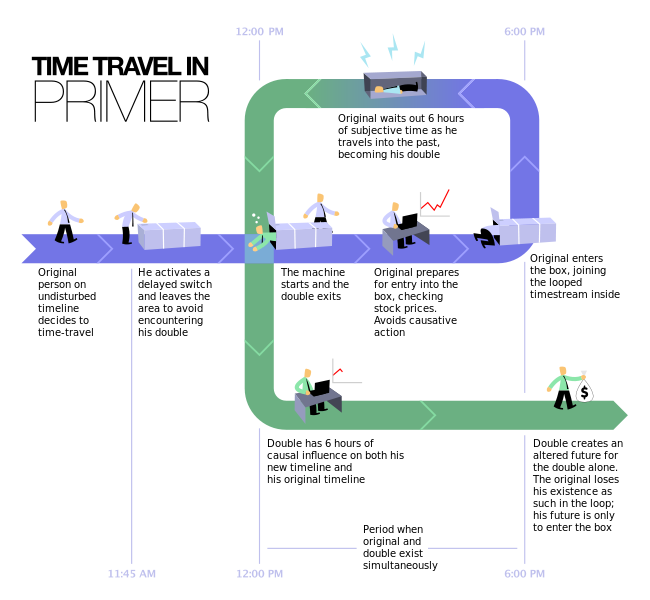
There are many timeline diagrams online that aim to explain Primer. A few are posted below (click on the image for the full size image). Unfortunately, most of these images are on dozens of websites online, therefore it was difficult for me to know where they originated. If you know where these images came from, please let me know in the comment area and I will link to the original creator :)
Diagram 1:

Diagram 2:

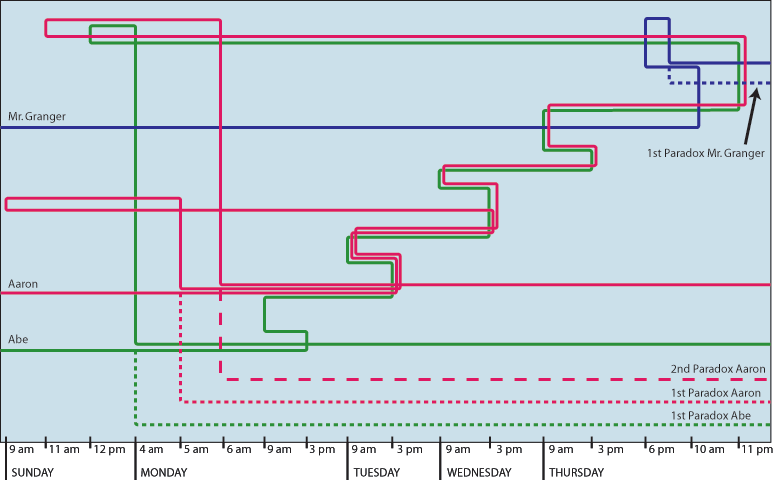
Diagram 4:
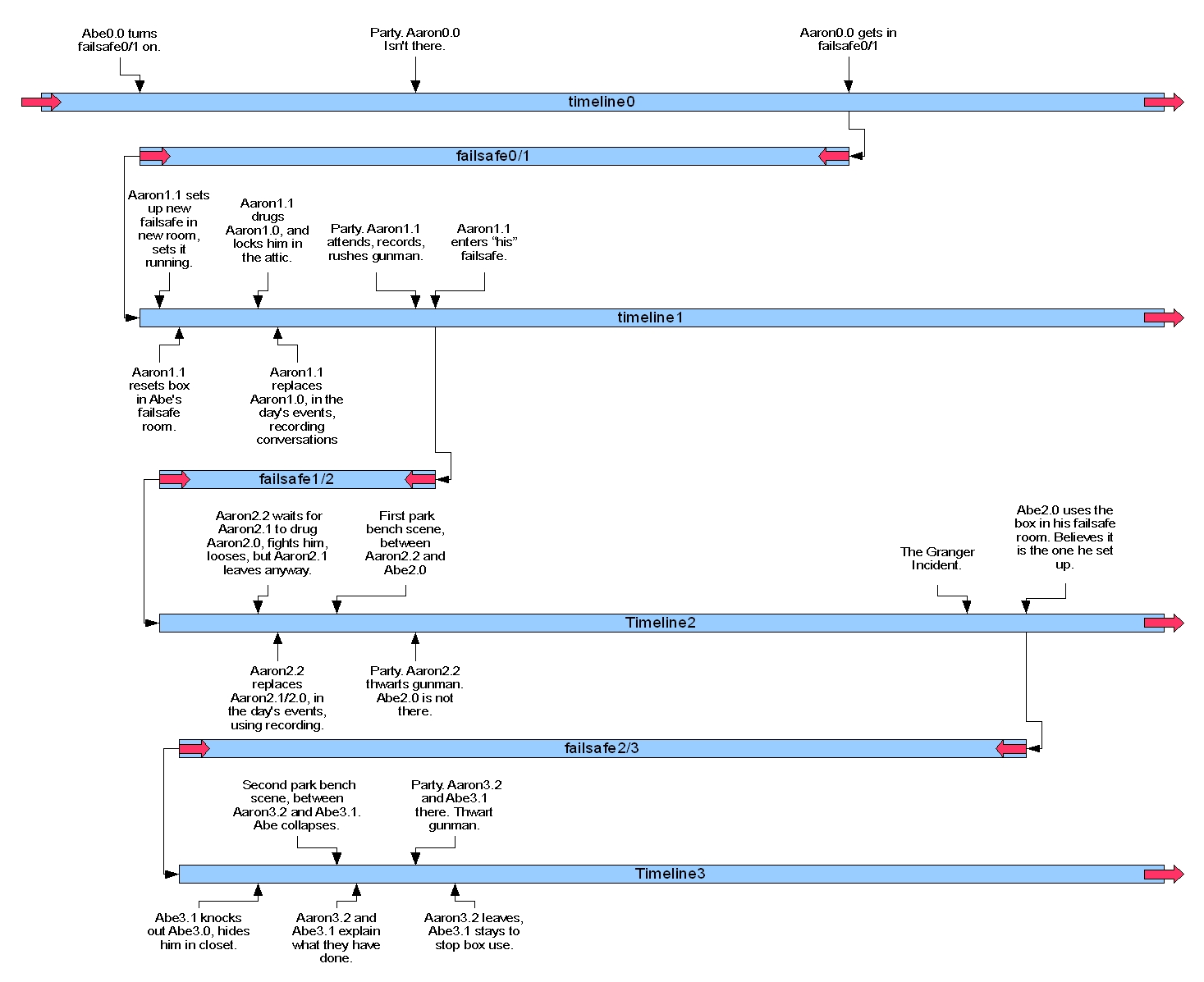
Diagram 5:
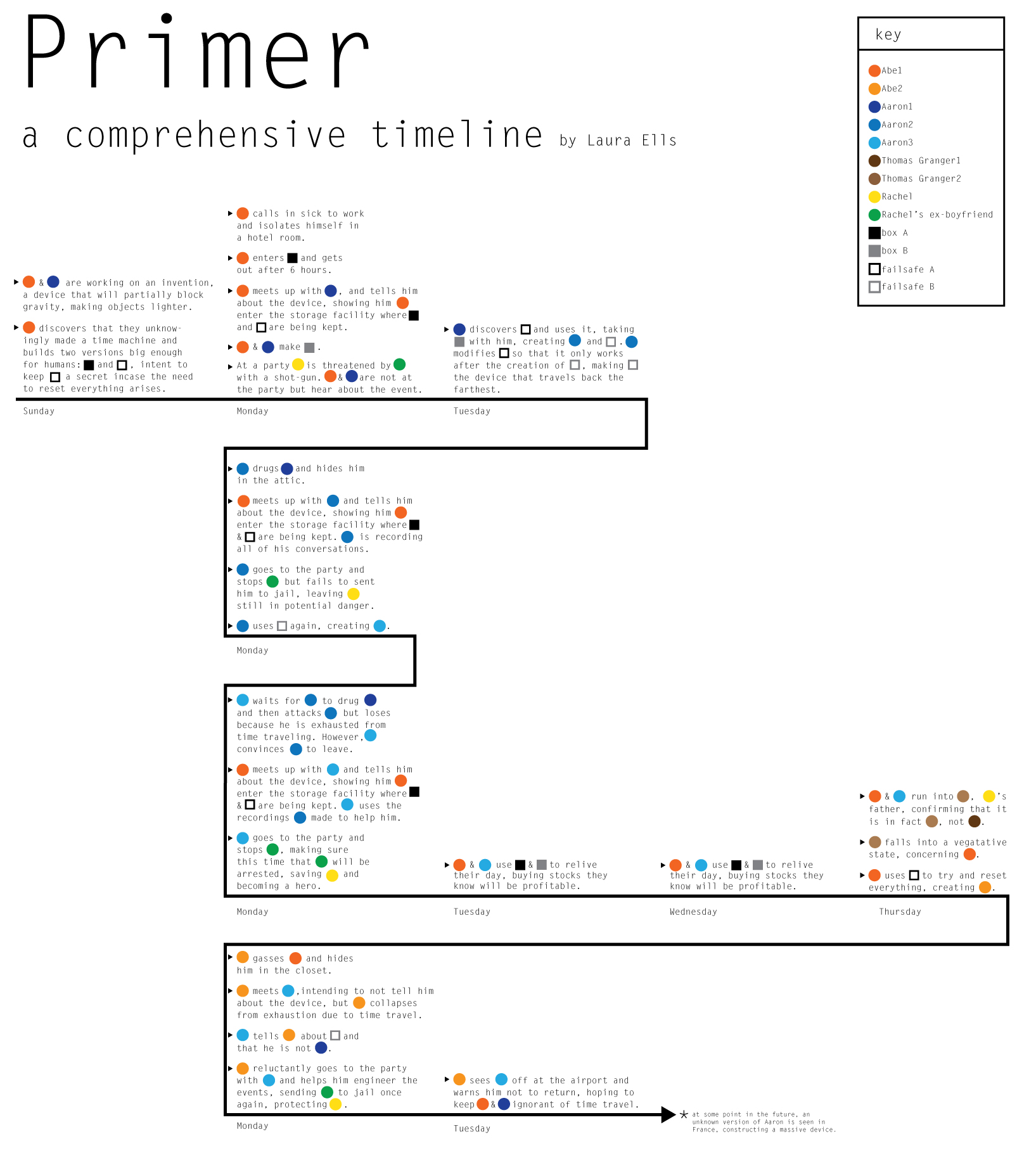
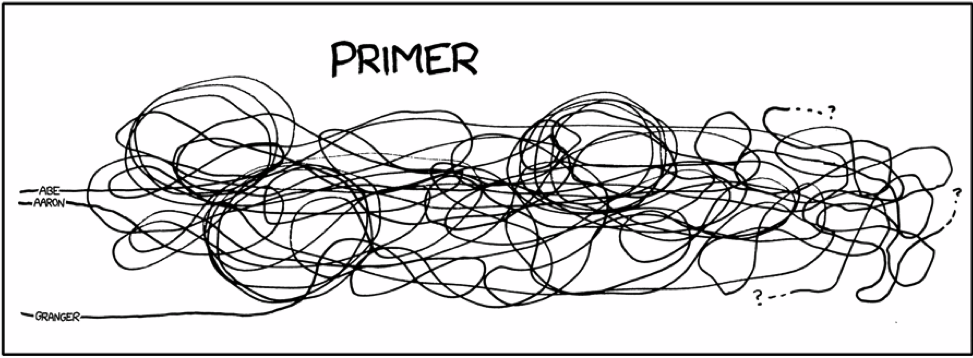
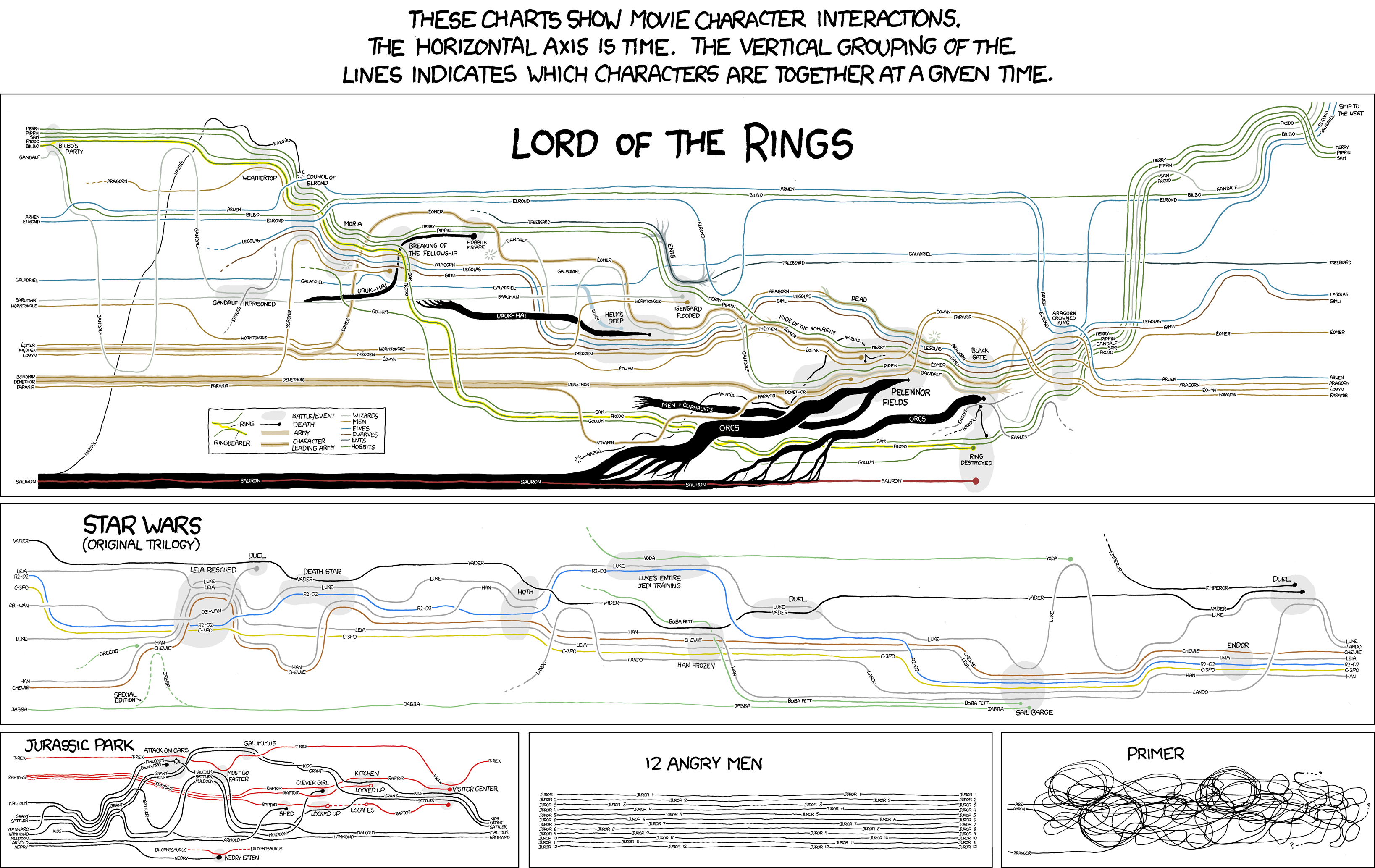
These images will not help you understand Primer….but they do highlight how the Primer timelines compares to other films :)
Primer Timeline:
Movie Timelines Diagram:
Primer Explained – Audio Commentary
The audio commentary below from qutm.org was only released a few months ago. It is one of the best ways of understanding the Primer timeline. All you do is start the audio commentary at the same time the film starts. The commentary will then walk you through each part of the film.
Primer Explained – Videos
There are not too many video explanations online. The main one available is a three part video series which breaks down everything with diagrams. Each video is around 9 to 10 minutes long.



Part 2 and Part 3 can also be found on YouTube.
Primer Explained – Articles
I found the explanation diagrams to be a little difficult to digest. The walkthrough articles that many fans of the film have published online are much easier to follow in my opinion. Below is a collection of some of the best explanations of the timeline in Primer. They should answer most of the questions you have about the film.
- Primer explained @ qntm.org
- Primer explained @ friendsinyourhead.com
- Primer explained @ Reddit
- The Primer Universe
- Primer: The Perils and Paradoxes of Restricted Time Travel
Narration - Primer Movie – Scene by Scene Explanation
- Primer and the Handwriting of Time Travelers
- A discussion about Primer on jaced.com
- IMDB Discussion Boards for Primer
Shane Carruth Interviews
If you have read this far, you are obviously a huge fan of Primer. Therefore, I am sure you would love to hear more from the man himself, Shane Carruth. The interview below with Shane Carruth was published by The B-Movies Podcast last month. In the interview he talks about his new movie Upstream Color though he also talks a little about Primer.
More interviews with Shane Carruth:
- Shane Carruth—Primer—10/11/04
- Shane Carruth Answers All Our Questions About ‘Primer,’ ‘Upstream Color’ and ‘The Modern Ocean’
- An Interview With Shane Carruth
- A Primer Primer
- Making the Film – Interviews – Shane Carruth – 07/Mar/04
- Interview with Primer director Shane Carruth
- Buckle Your Brainpan: The Primer Director Is Back With a New Film
- IMDB Discussion Boards for Shane Carruth
The Future for Shane Carruth
It is great to see the return of Shane Carruth after a long absence. Upstream Color is just out and he is shooting another film called “The Modern Ocean” in a few months time. Sadly, the script he worked on for years has not came to fruition. The project, called “A Topiary”, took up a huge amount of his time but he was unable to secure the funds for it.
Apparently, he was learning how to design the 3D creatures himself for the film by visiting special effects companies.
I really hope that A Topiary gets made in the future, be it from investors or from funding through a website such as Kickstarter. It sounds epic. Here’s what he said about the film to Wired Magazine:
For a while, Carruth tried writing a romantic coming-of-age story set on the high seas. But soon he began mapping out something much bigger, an epic sci-fi story called A Topiary. It’s a tale told in two parts: The opening section follows a city worker who becomes obsessed with a recurring starburst pattern he sees hidden everywhere around him, even in traffic grids. He eventually joins with other believers, forming a kaffeeklatsch-cult that’s soon undone by greed and hubris.
The second half follows a group of 10 preteen boys who discover a strange machine that produces small funnels, which in turn can be used to build increasingly agile robotlike creatures. As their creations grow in power and size, the kids’ friendships begin to splinter and they’re forced to confront another group of creature-builders. The movie ends with a massive last-minute reveal, set deep in the cosmos, suggesting that everything we’ve just seen was directed by forces outside the characters’ control.
A Topiary consumed Carruth. He wrote much of it in the Dallas suburbs, living off the money from Primer. “There’s no way I could have done that if I had a wife or a family or health care,” he says now. “There’s a way to live that is incredibly thrifty.”
While working on the script, Carruth used a 3-D computer program to design all the creatures himself. And since the movie would require hundreds of effects shots, he began visiting f/x houses to learn about their workflow and to see how he might create his own effects. He even built his own small-scale CGI system, renting cloud computers and writing code. “That’s where I lose my time,” he says. “I get obsessed with these little things. I think there’s some novel way to find a solution, and I go down the pathway too far.”
After Carruth finished a first draft of the script, he gave it to director Steven Soderbergh, a fan who had reached out to Carruth after he saw Primer. Soderbergh asked his friend David Fincher to serve as co-executive producer. With their names and their blessing, Carruth made a mock-up trailer for investors, one that incorporated some of his own effects work plus images from many of the Spielberg movies he watched growing up. With a budget in the low $20 millions, Carruth began meeting with possible backers, a process that ended up consuming yet another year.
“Nobody ever said no,” Carruth says. “It was always enthusiasm and amazement and ‘We can’t wait for this!’ Meanwhile, no money’s sitting in the account.” He kept lowering the budget, getting it down to about $14 million, but even that couldn’t secure an investor. “If this were the ’70s, people would be throwing money at him,” Soderbergh says. “It’s just a different time now.”
Finally, Carruth realized that A Topiary was a problem he simply couldn’t solve. Worried he’d be forever stuck in a loop of endless meetings and fruitless go-aheads, he walked away. “I decided that if nobody was gonna say no, I was gonna have to say no,” he says. “It sort of just broke my heart.”
Shane Carruth’s experience suggests that even a successful film will guarantee you full control over your next project. Investors want involved in the project. I can understand this side of it. Can you imagine funding a film for $20 million and having the writer and director advise you that you have no say on what happens? You would fund another project. On the other side, I admire Carruth for not allowing other people tampering with his creation. Why should he give up final cut of his film or be told who he can or cannot cast. Even if he does not secure funds for A Topiary, I hope he continues to make films.
As much as I would love to see it, I do not believe there will ever be a sequel to Primer. There are no loose ends that need tied up. I cannot think of any plausible storyline that would happen after the events of the first film (can you?).
Summary
If you have read this far without watching Primer; shame on you! For everyone else, I hope you have found this article useful. Primer is one of the most intelligent films ever made. Most films that have a twist at the end of the film are easy to understand once you know what that twist is.
Primer is different. It really does take a few viewings to understand everything that happened. Once again, I will reiterate: Anyone who says that they understood everything about Primer after one viewing is a liar.
I’d love to hear from those of you who have seen Primer, so I encourage you to leave a comment and share with me your opinion of the film. Please leave a comment if there is any aspect of the film you do not understand and I will try and explain how I see those events.
Thanks for reading.
Kevin
The fact that time travel in the negative direction is impossible isn’t a criticism of the film by the way, I still think it’s extremely good! I’m just interested in the violation I’ve mentioned, even then I don’t have a major concern with it. I’m just interested in discussing why it’s wrong.
Well that point alleviates it’s only boundary. You don’t need to know anything concerning QT to render that particular point moot, though you certainly do to enter into dialogue about it. There’s a tacit implication there.
That point can be proven through classical treatment. Time travel is impossible due to its violation of the 2nd law of Thermodynamics. And your inference was never implied in anything I stated in the aforementioned rejoinder.
It’s the arrow of time, entropy occurs in one direction for all realistic non ideal irreversible processes.
The quantum mechanical approach I outlined is an means of using a time DEPENDANT wave equation. Without sufficient knowledge of QT it’s impossible to come to terms with what I’m suggesting.
Huh. I definitely don’t understand very much about quantum mechanics…but it sounds like what you’re saying implies that a particle can’t change direction in the time dimension even though it can travel through time at different rates, meaning time travel back to the same point in space but at an earlier time is completely impossible, right?
Your last point ties in with a quantum understanding of space-time but only to the extent that we can assume varying spacial positions of mass as the square of the probability distributions given by the T.D.S.E. Now I’m not going to get heavy with the QT here but I’m afraid I do know categorically the imposition of matter conservation and it is, to refer to your point, the former. It certainly does violate this law. They acknowledge their own physical existence, in so doing collapsing the POSITIONAL uncertainty of the T.D.S.E. As you’ve said, they move in and out of time junctions but at this particular nexus they occupy the same spacial paradigm. It is, very simply a violation of the sort already mentioned.
I cannot think of any time travel film that involves going into the past that does not break the laws of physics. I only have a problem with time travel films when they set their rules for time travel and then break it. I don’t think Primer did that. It obviously ignored a lot of things, but it did not state something cannot be done and then go and do the opposite.
Many scientists came out and said that Interstellar was pretty accurate, but a lot of it seemed far fetched to me so I’m not sure I’m knowledgeable enough in that subject to say whether that is true or not.
I enjoy time travel films, but I think that if you sit down and start picking apart any time travel film you are going to find the laws of physics being broken.
What’s your thoughts on Los Cronocrímenes (Time Crimes)?
That’s a good one to watch if you haven’t already seen it. :)
Kevin
It may seem like the doubles of the protagonists poof into existence, violating the conservation of matter, but aren’t their doubles really just jumping from one time to another?
I don’t know if the conservation of matter technically states that the total amount of matter at a single point in time remains constant, or if the sum total of matter at *all* points in space*time* remains constant. Considering that we can never measure all points in space at the same instant in time anyway, I would guess it’s the latter, in which case Primer doesn’t violate it.
Good film yes, great film certainly not. I never tire from pondering how someone versed in mathematics, thus, well educated and quite obviously intelligent enough to produce what is – I still admit, an entertaining and thought provoking movie – could have such a tenuous grasp of elementary physics.
I don’t care for, nor shall I lend any credence to, occult band-wagoners who bemoan what I’m about posit, but the film has one major technical flaw. At points in the film we observer the characters in different timelines and so far everything makes sense and all is logically above board. Then however, I’m afraid a rather major physical faux pas is made. There comes a scene where the characters observe themselves at a point in time. They acknowledge THEMSELVES in time. I hope someone has beaten me to the point on this. In order for two individuals to observe THEMSELVES in the same physical reference frame consisting of 4-basic dimensions (x,y,z,t) the conservation of energy/matter has to be violated. The sanctity of the most prescient and inviolate laws in physics is abused absurdly. In order for this to occur, two individuals identical to the protagonists would have to be CREATED and come to occupy the same period in time as the aforementioned. It’s the equivalent of living at a point in time where an extra me exists in a world whose energy is finite and cannot yield to the creation of matter from nothing. For four individuals to occupy the same point in time this simple principal has to be violated.
I still insist it’s a great film, but any piece of cinema that wishes to partake in scientific profundity cannot simply select which elements of its being will stipulate to fact and which to fiction. If you wish to produce something with the merit of scientific intricacy then you must adhere to the rules of the box you put yourself in.
Especially the basic ones.
I found a detail from the movie that directly contradicts the first two timelines here (haven’t checked the others). After Aaron and Abe find Grainger, they’re arguing about what he changed. “I know he changed this; I know we weren’t having this conversation the first time through,” Abe says, directly implying that **they had already lived through this point before and had come back in time.**
There are other moments in the film with those mysterious cuts too. When Aaron and Abe have just seen Thomas Grainger and are sitting in the car deciding what to do, there are brief flashes of Abe running back beside the house, as if from a different timeline than the one Aaron and Abe are depicted in. And I’m confused how all three wind up behind the house when Aaron chases Grainger down the street, but Abe watches and then turns to go behind the house. Maybe Aaron and Grainger went around the other side, but there’s a fence that would seem to prevent them from doing so. I’m starting to think the Aaron and Grainger who were running down the street were different than the Aaron and Grainger who Abe found behind the house!
I just rewatched this again and there’s a big mystery that I haven’t seen an explanation for anywhere!
At 13:11 (in my copy at least), Abe wakes up to a call from Aaron at 7:00 pm. But the movie keeps cutting back and forth between two distinct versions of the scene — suggesting that in one Abe has gone back in time and is reliving the same events a bit differently. Right before he leaves the room he says “Hey Brad”, as if reviewing what he said in a previous timeline so that he could repeat it verbatim a moment later. Yet this scene seems to take place before they had built the boxes, so I don’t understand how Abe could have come back in time to this point. Have any of you guys considered this?
Looks like you have written a good explanation of the movie Tivep :)
Great movie!!
Here’s a stepwise explanation of the events in the movie.
Helps you appreciate the movie way more!
http://digestivepyrotechnics.blogspot.com/2015/01/primer-plot-explained.html
No problem Kelly. It’s much more enjoyable the second time around once you know what is going on.
Thanks so much, Kevin, for this page. I watched the film the other night on a friend’s recommendation, without reading anything about it first. I really trust this friend’s opinion, so I plowed through it, even though I really had no idea what was going on (although I loved the style and dialogue, and appreciated that the filmmaker had to have been quite knowledgeable in math and physics). Now that I have seen the Wikipedia diagram – extremely helpful!! – and the detailed timelines, and now get what is actually happening, I can’t wait to watch it again. Thanks for pulling this all together.
Great post!
I am the creator of the second timeline, “Diagram 2.” It’s hosted over at http://qubitrot.org/?p=8, which I would hesitate to call a “blog.” It’s something I put together a while back to better understand the events of the film, and it’s great if it can help others as well. Feel free to use it as you wish, just drop a link to the source. Cheers!
Thanks Kevin!
Hi Bill,
The timeline of Aaron 0 is never shown. The viewer never knows what happens as a result of that. We do see at the end that Abe stays behind to make sure the first Abe and Aaron do not built the boxes in the first place.
It’s also worth noting that at the start of the film, we are not seeing the first Abe, we are seeing the second. That is what confused me the first time I watched the film.
What you need to remember is that there are different timelines. When something happens that affects the first time, a new timeline is created. For example, let’s say that you go into the box. There will be several hours during the day in which you and the previous version of you exist. We can call them Bill 0 and Bill 1. Bill 0 will become Bill 1 if you do not interfere with what Bill 0 does that day.
What if you do interfere with Bill 0 and distract him from going to the box that day? Your understanding is that nothing can interfere with Bill 0 becoming Bill 1, however within the film, it does. The way the film explains it is that a new timeline is created when something like this happens.
Timeline 1 = Bill 0 travels through the box to become Bill 1. Bill 0 goes through his day as normal and becomes Bill 1 when he enters the box. Bill 0 will then cease to exist.
However, a new timeline can be created:
Timeline 1 = Bill 0 travels through the box to become Bill 1. Bill 1 stops Bill 0 from entering the box as he did; whether it be physically stopping him or distracting him (e.g. by calling him and telling him to be elsewhere). As Bill 0 does not go through the box, a new timeline is created.
Timeline 2 = Bill 0 and Bill 1 co-exist. Perhaps Bill 0 will go through the box the following day, perhaps he never does (e.g. if Bill 1 had warned him). Bill 1 will continue to live in the same world as Bill 0.
The key thing to note is that there is only one timeline. Timeline 1 will become timeline 2. And if another Bill is created, a new timeline (timeline 3) would be created. You will notice that in diagram 2 in my post above that different timelines are specified.
Hi Kevin
I just watched the movie this week. You said no rules are broken. The who thing seems to be one big paradox after another though. Did I misunderstand? Examples would be…
1. Aaron 0 goes through the box and becomes Aaron 1. Aaron 1 then goes and drugs Aaron 0 before he ever enters the box. That would create the first paradox because Aaron 0 needs to go thought the box without ever disrupting the original timeline in order to create Aaron 1 in the first place.
2. Aaron 2 comes back and fights with Aaron 1 after Aaron 1 drugs Aaron 0. Aaron 2 losses the fight yet convinces Aaron 1 to leave town. That would create the second paradox on top of the first. If Aaron 1 leaves town, then he can never enter the box to ever create Aaron 2 in the first place. Therefore Aaron 2 can never come back and convince Aaron 1 to leave town. Yet, it would never get this far because of the first paradox created above in my first example.
Now that my mind is all twisted, What am I missing? Thanks for your help.
hahaha
Ok, after whatching the film second time, reading 2 explanations, whatching the explanation movie and reading through the diagrams my brain is boiling and I can only say http://www.youtube.com/watch?v=kdhhQhqi_AE
haha Yeah the film definitely needs more than one watch. You’ll see a lot of things you didn’t the first time.
Ehm… I wouldn’t say that I did understood everything from the first view, the thing is a didn’t understood that there even exist such a mindf**king twist. I mean, the first diagram – we don’t even see two timelines? Looking at diagram 4 I didn’t get there was a Paradox Aaron1, I only figured the paradox Aaron 2. Gotta watch once again, wish me luck :-)
Back in the future now looks so pop and childish….
Thanks for telling me about this movie… I just saw an advert for it, it’s on TV here in 40 minutes! And I was thinking I’ll buy the video. I’m off to set the video as I’m sure you’re right that I’ll need to watch it a few times and with the house to myself for a week, I can do that!. :)
Nice one. Hope you haven’t seen any spoilers here before you see it. :)
If you enjoy time travel films, you’ll love it. Let me know what you think of it after you’ve seen it :)
Kevin
I must admit I’ve not read the whole post as I want to see this movie, but I just thought I would add there is one line in Terminator 2 which I think explains the paradox to a point. Miles Dyson talked about the project he was already working on, the data was already there and in theory would have eventually become the Terminators we all know, but when Arnie came back in time, the direction of those ideas was changed. So the following 15 years was changed through the acceleration of technology that was already being developed, but there was no long-term… and I’ve gone cross eyed!
haha yeah that tends to happen when talking about time travel in films :)
That suggests that the technology was accelerated greatly because they found the T1, but it would have been developed anyways. However, I imagine that within the first timeline it would have taken decades in order to develop that technology (i.e. without the terminator arm), but it did not. The timeline of the terminator being developed was not longer within the first timeline (i.e. the original timeline that the terminator had not existed in).
A bigger problem is Reese being the father of the person who sent him back!! There’s no getting around how wrong that one is :)