
Who is your audience?
Who are you writing for?
These seem like simple questions, don’t they?
If you had asked me these questions in the past, I would have told you that I write articles for my subscribers. I would have told you that I write articles for my regular readers.
I am not so sure now.
A Different World
The landscape is very different to how it was ten years ago. Social media was not as popular and most blogs received a higher number of comments.
I also believe that bloggers had a closer connection with their readers because they interacted directly on the blog itself.
There is no disputing how valuable a subscriber can be. A loyal subscriber will visit regularly, comment, share your content, and recommend you to others.
However, in today’s climate, I’m not sure sure you should be focusing all your attention on them.
Who Should You Be Writing Content For?
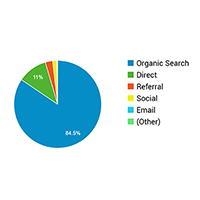
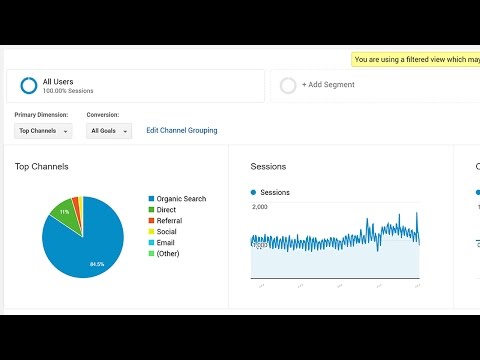
The reason I bring this issue up is because my blog receives around eight times as much traffic from search engines as it does from people visiting directly.
Most of that traffic will be people looking for a solution, clicking on a related article on my blog and then leaving once they have read the article. Sure, some of those people will have found my content useful and converted into subscribers, but the percentage of traffic that converts to regular readers is relatively low.
This is an issue I discuss in the video below.
I am lucky that I still get a large number of people who read every single article I write, but I also need to appreciate that the vast majority of my traffic comes from search engines. These people may not read my blog regularly though they are responsible for most of this blog’s income.
The reality is that from a traffic and income point of view, there are many valid reasons to start targeting your articles for search engine visitors rather than return readers. Long term it may help you develop a better blog due to increased traffic and income.
Why Does Any of This Matter?
In my original draft of this article I didn’t expand enough on the reason why any of this matters; therefore in this section I would like to clarify why this issue is important and why it can change the way you run your blog.
When the question of whether you should write for subscribers or search engine visitors is raised, the most obvious answer is: Why not write for both?
It’s a valid response, but I also feel it disregards how difficult it is to build a loyal subscriber base and keep it.
Large blogs can afford to post dozens of times every time on a wide variety of subjects because they had a large writing team and a big budget. For most blogs, in order to build a readership you need to focus on only one or two related subjects and ensure that you do not stray too far from that or you will alienate your audience.
For example, if you run a technology blog, you shouldn’t post about a website platform such as WordPress, talk about your family holiday, or share your thoughts on the latest Marvel movie. People subscribed to your blog to read about technology and if you stray from that, subscribers will unsubscribe.
If you are not bothered about returning visitors, you do not have to worry as much about this issue.
Take my blog for example.
I receive eight times as much traffic from search engines than I do from returning readers. The stats suggest that I should focus all my attention on search engine visitors and place less emphasis on subscribers.
In fact, let us go one step further and say that I do not care about subscribers and I will no longer write content with them in mind.
What does that mean?
Well, it means that I am no longer tied to the approach I would take to building a readership.
This blog mainly focuses on internet marketing, WordPress, and other website development issues. If I don’t care whether I get subscribers or not, I could post about anything I want.
I could publish reviews about cars if I thought the commissions were good. I could start publishing articles on subjects such as finance and medicine because I know the conversion rates in those industries are very high.
Diversifying my content strategy in this way should not hurt search engine traffic to any internet marketing related articles I continue to publish, but would bring in visitors who are interested in many other subjects.
I have no doubt that this blog would generate more money if I did take this approach. WordPress theme reviews might generate a little money, but as I have explained in the past, conversion rates can be terrible.
Not caring about subscribers could influence my blogging strategy in other ways.
My position on guest posting, for example.
I receive dozens of guest posts every week from aspiring bloggers and SEO companies looking to promote their clients by submitting content to my blog.
As a rule, I reject 99% of them because the quality is poor and it would be time-consuming to edit them. Additionally, there would be a high risk of me losing my voice on my own blog if I started publishing guest posts twice per day from other people.
However, if I just opened the floodgates and started accepting guest posts, I could increase my publishing frequency considerably.
Even if the quality of articles are not as high as my own, by publishing as much as five times as much content every month I will undoubtedly increase traffic from search engines. All I would need is a few guest posts to rank well in order to generate a lot of traffic.
Accepting guest posts is something I may have to reconsider in the future, but for now I just wanted to expand upon this issue and explain how your blog strategy will change if you no longer care about getting people to visit every day.
The internet is changed.
Internet users are bombarded with content from hundreds of different websites every day and subscribe to a huge number of people and websites on Twitter, Facebook, Instagram, and other social media services. Therefore, even if someone subscribes to you on social media, you are not always going to break through and make a connection to them because they follow so many people.
What Say You?
I would just like to remind you that I never wrote this article with an answer in mind. I wrote this article to create a discussion and hear your opinion on this.
Let me know in the comment area what percentage of your blog’s traffic comes from search engine visitors. I would also like to know if you write articles specifically for search engines, multiple traffic streams, or solely for your subscribers.
Thanks for reading.
Kevin
we specially write our articles for the search engines as people are most likely to not come to our site as we have e-commerce related site.
I resist either/or choices. When offered I’ll choose pie and cake. I look for both/and. I’m wondering if there are ways to write to write personally and also for the search engines. Two blogs? Alternating posts? An artful integration?
I’ve expanded my thoughts on this in the article.
Again, I should have done that before. Hope it clarifies my thoughts on this a bit more.
I really don’t have an answer to all of this and I am acutely aware that there are a lot of pros and cons on both sides.
:)
I think in hindsight I didn’t really clarify my point enough. I will update it to clarify why this is important.
It’s a difficult thing to get right.
If you look at large blogs, they have expanded the topics they cover and just targeted search engines. They stopped making their articles personal a long time ago and just focused on traffic. The way that people view content online today and the way that Google ranks websites, this approach makes sense.
Hi Kevin,
Your expansion helped me understand how the writing might be different. After working at clarifying my vision, it was disconcerting. On reread this morning, it’s not so extreme. my initial response reminds me of the rigidity of a recent convert.
I’m glad you expanded on this. It’s given me a fresh way to look at my writing. I understand the reluctance to include it. Your post’s one of those that’s like a central bubble in a mindmap. There can be expansions leading everywhere.
What do you mean by next stage Rajesh? Can you expand on this :)
Hi Scott.
I expanded upon this in my first draft on the post, but I didn’t want to delve too deep as I wanted to open it up for everyone (plus I didn’t think it fit well with the rest of the article).
From my own point of view, I would post more content that regular readers may not like.
For example, at the moment I don’t accept guest posts despite getting offers of guest posts every day. I could publish articles every day if I accepted guest posts.
I could also stray off topic more. For a blog to built a readership it is better to focus on just a few key related topics, but if I wasn’t focused on building an audience then I could just focus on SEO. Consider a service that is unrelated to internet marketing or website development. I could review such a service and make good money from affiliate tracking links if I got the page to rank well. This would alienate some subscribers, but it could help me increase traffic an income.
In hindsight, I really should have expanded upon this more in my article :)
Kevin
Search engine traffic will also go down some day not very far away. It maybe better for blogs to transition to the next stage quicker.
Kevin,
How would you change how or what you write if you start writing to search engines?
I’m just beginning to write more seriously in my blogs and hadn’t thought about doing other than writing to help those who read what I write. Writing to search engines may increase the numbers who might benefit.
My goals: help readers with their sites; take on an occasional project and manage a few more sites.
Thanks in advance,
Scott