
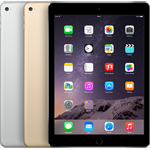
Apple recently announced the release of their new iPad Air 2 and iPad mini 3. Many were underwhelmed by the launch of the iPad mini 3 as it is not a big upgrade over the previous version.
Profits from iPads have dropped considerably. Does this mean that Apple are losing their grasp on the tablet market they helped define?
In this article, I would like to talk about the recent announcement and why I think the new iPad mini 3 offers such bad value for money.
I Found a Great Tablet at an Affordable Price
Last week I purchased a tablet for my girlfriend. She had advised me previously that she did not need one. I believe this was partly due to her having her iPhone 5 stolen earlier this year. Since then, she has stated many times that she does not want to spend a lot of money again on phones and other electronic devices ever again. This is a natural response to having something stolen.
While I do like finding bargains, I am not afraid to spend money to get a good product. When I purchased my iPad 3 in June 2012, I chose the 64GB model; which was the most expensive version available at the time. However, I knew that my girlfriend would be upset if I bought her something as expensive.
Shortly before her birthday, Tesco released a budget tablet in the UK entitled Hudl2. It was the successor to their budget Android tablet Hudl that they released last year.
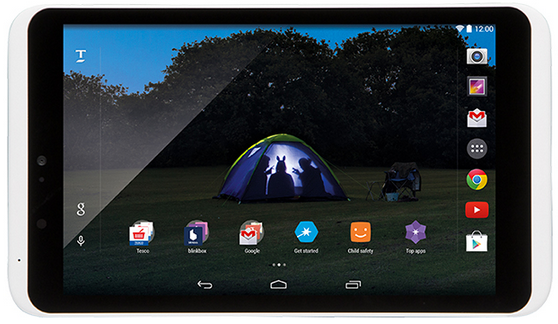
For £129 (around $208 USD), the specs are impressive.
- 8.3″ IPS LCD screen that offers full HD (1920×1200 resolution at 273 pixels per inch)
- 16GB built in hard drive and micro SD slot to expand storage (they state that the limit for micro SD cards is 32GB, but there are users who are using 128GB)
- 1.83 Ghz Intel® Atom Quad-Core Z3735D processor
- 2GB RAM
- 1.2MP front facing camera capable of 720P resolution and 5MP back facing camera capable of 1080P
- Micro HDMI port for connecting to the television
- 8 hours battery
It’s a fantastic little device. A similar sized device to the Hudl2 is the Samsung Galaxy Tab S 8.4. It also offers 16GB storage and has a micro SD card slot for expansion; but lacks the micro HDMI port. What it does offer is 3GB of RAM and an octo-core processor.
The fact is that my girlfriend would never use that additional processing power as she will not use the tablet for games. And with the Samsung tablet retailing at £269.99 on Amazon UK, it is more than double the price of the Hudl2 that I purchased her. It highlights how much of a bargain the Hudl2 is at the moment.
Down the line, I may even consider getting one for myself. It does everything I want: Games, movies, YouTube, reading, and browsing. Plus the micro HDMI port means that it could be used as a portable media device to play movies through a television. I do love the look of iPads, however the competition has caught up and they do not offer as good value for money anymore.
Apple’s Plethora of iPads
I purchased my iPad 3 in June 2012 in Colombia. The tablet market was not as diverse as it is today. Sure, there were several Android tablets out, however the two best tablets out at the time were the Samsung Galaxy Tab 2 and the iPad 3.
I tried all of the tablets in the shops and was all set to buy the Galaxy Tab 2. It had a good screen, I liked the open nature of Android, and I liked the fact it had a micro SD slot. However, around the time I was making my decision, the price of the iPad 3 dropped in price in Colombia considerably. It was now around £120 cheaper than it was in the UK and the basic model of the iPad 3 was the exact same price as the Galaxy Tab 2.
Despite hating iTunes with a passion, the drop in price convinced me to buy the iPad. The decision was made easier by the fact that Android had very few applications optimised for tablets; whilst iOS had hundreds of thousands. It was the right device to buy. I have since passed the iPad onto my little brother, but it was a great purchase and I got my monies worth.
When I bought the iPad 3, I already had a 27″ iMac and an iPhone 4. However, don’t be misled into thinking that I was a big Apple fan. They make good looking devices, but they are usually vastly overpriced.
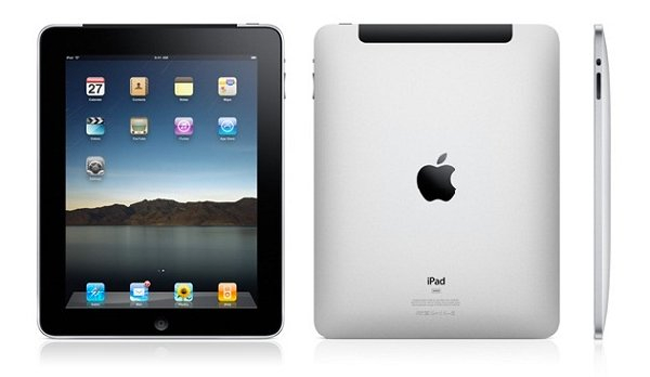
I purchased the iPhone 4 when it was launched for the same reason I purchased the iPad 3: It was the best device available. The lack of dedicated tablet apps for Android meant that I would have been opting into an inferior ecosystem if I chose an Android tablet in 2012.
Likewise, when I bought the iPhone 4, it was the best all round smartphone available. Previously, I had bought the second Android smartphone ever released; the HTC Hero. It was painfully slow and I ended up selling it a month or so later and buying a Blackberry. The QWERTY keyboard made the Blackberry a great phone for messaging and emailing; however it was a terrible device for browsing the web and playing games.
Android soon caught up with iOS and in my opinion there is little between the operating systems today from a feature point of view. Without doubt, Android devices offer the best value.
My girlfriends birthday fell just a week or so before the announcements of the new iPad and new Google Nexus devices. I had no plans on buying her an iPad, however I always pay attention to releases of new devices.
Apple announced two new iPads: The iPad Air 2 and the iPad mini 3.
There were two things that surprised me about this announcement. Firstly, I was surprised to see that Apple are now selling five iPad devices. Secondly, I was surprised that Apple upgraded next to nothing in the iPad mini 3.
When I purchased my iPad 3 over two years ago, I had two options: Purchase the iPad 2 or purchase the iPad 3. That was it. There was not much of a saving for me to go with the iPad 2 and the iPad 3 had a much better spec, so it was an easy decision to make. There was also an option of a cellular (3G) model; though that was never a consideration as I would never use it.
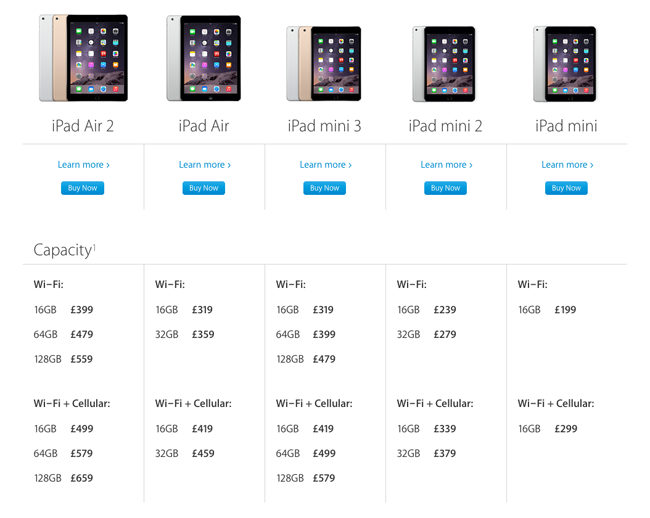
Someone buying an iPad today does not have such an easy decision. There are five different versions available and each model comes with multiple storage options (except the iPad mini 1, which only comes in 16GB). There is also the decision of WiFi or WiFi and cellular.
Tech blogs such as cNet have noted how much harder it is to choose an iPad now. I’m a tech savvy guy, so this kind of decision is a little easier for me; however I have no doubt this presents a difficult decision to parents who are buying iPads as gifts for their kids.
The idea behind keeping the first iPad mini on sale is to have an iPad that can be sold to the lower end of the market. Well, that is what most people believe.
Let’s compare the iPad minis that are available (using UK prices).
In the UK, the first iPad Mini still costs £199 for the 16GB version. Seems a great price for an iPad, doesn’t it? However, when you look closer, it’s a pretty poor deal. The first iPad mini has a poor resolution of only 1024×768 pixels. That is only 163 pixels per inch. If you recall, the Hudl2 Android tablet I purchased for my girlfriend only cost £129 and that has a resolution of 1920×1200 pixels; which is 273 pixels per inch.
At £239 for the 16GB version, the iPad mini 2 gives you the best value by far. It only costs £40 more for this upgrade. Yet, you get a much improved screen; 2048×1536 pixels. That is 326 pixels per inch. The A5 processor has also been replaced by the more powerful A7 processor. The camera has a new panorama mode and there is now 3xZoom for video. A MIMO antenna is also built into the iPad mini 2.
In short, £40 gets you a much faster device with a much improved screen and many more features. It is the smart buy.
The 16GB version of the new iPad mini 3 costs £319. That’s an increase of £80 over the iPad mini 2.
So what does a 34% jump in price get you? Pretty much nothing.
The new iPad mini 3 features Apple’s fingerprint identity sensor. That’s it. Everything else has remained the same. They should have named it the iPad Mini 2b.
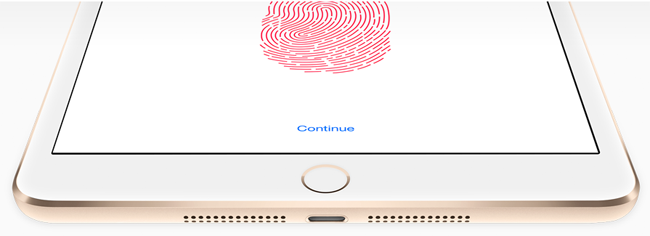
I can see the benefits of the fingerprint sensor on a phone. Phones are taken with you everywhere and have a higher chance of being stolen. However, tablets tend to be used at home. And when they are taken somewhere, they tend to be carried in a bag. Sure, there is still a risk of an iPad being stolen, but people are less likely to bring out an iPad in a busy train and start using it.
I am unsure as to why Apple have released the iPad mini 3. I would suspect that problems with development held back a proper upgrade. Though that is wishful thinking. The iPhone 5C illustrated that Apple are willing to put some foil round a turd i.e. sell an average device at a premium price.
The upgrade for the iPad Air is a little better. The original retails at £319 in the UK for the 16GB version. The new iPad Air retails at £399.
The additional £80 gets you more than just the fingerprint sensor. The new iPad Air uses an A8 processor rather than an A7. It also offers burst mode for photographs, slow motion video, and a barometer. The depth of the iPad Air has also dropped from 7.5mm to 6.1mm and the weight has dropped from 469 grams to 437 grams.
There is no real reason for existing iPad Air owners to upgrade, but at least new iPad Air owners know that their additional £80 will get them more than just a fingerprint sensor. They will get a faster tablet with more photography features that is slimmer and lighter.
Apple Losing Ground to Android Alternatives
The iPad Air 2 appears to be a decent upgrade to an already great looking device. However, the launch of the iPad mini 3 is baffling. I realise that millions of Apple drones will still purchase the more expensive third version of the iPad mini; despite the fact it’s just a mini 2 with a fingerprint sensor.
If Apple have any sense, what they will do is remove the iPad mini 2. From a business point of view, it makes the most sense. It would give those who are unsure about what iPad to buy a reason to go with the more expensive option, rather than the cheaper one.
The original iPad mini is looking outdated. There are now Android devices available 40% cheaper than have a much better specification. I won’t deny that iOS is a good operating system; but is it so good that people will pay £199 for what is effectively an entry level tablet?
Tech websites are reporting that iPad sales have dropped 13% this year. The theory is that this is because the the iPhone is getting bigger. I’m not so sure.
Firstly, there are less people out there without a tablet and those who do may not be ready to upgrade. I imagine Android tablet companies have been affected by this too.
Secondly, the Android tablet market is very competitive. Android completely dominates the lower end of the market, however the upcoming Google Nexus 9, the Samsung Galaxy 9 and Amazon Fire HDX 8.9; illustrate that Android is eating into the premium end of the market too.
Apple are in a difficult position. They cannot make their entry level iPad too cheap or sales of their more expensive iPads will drop. However, I fail to see how they can reach the lower end of the tablet market if they do not.
Do not shed a tear for Apple just yet. While iPad and iPod sales dropped this year, sales of everything else increased. 9To5Mac reported that in quarter 4 this year:
- iPhone: 39.272 million, up 16.2%
- iPad: 12.316 million, down 12.5%
- Mac: 5.52 million, up 20.7%
- iPod: 2.62 million, down 25.1%
- iTunes: $4.208 billion, up 8.2%
- Accessories: $1.486 billion, up 12.7%
This resulted in total revenue of $42.123 billion, up 12.4%.
Perhaps the drop in iPad revenue is just a blip. There are rumours of an iPad Pro being released with a huge 12.9-inch display. If they also release a proper upgrade to the iPad Mini 3, they could see iPad sales increase significantly in 2015. Time will tell.
Thanks for reading.
Kevin
There are certainly Apple users who are tech savvy, however I do feel that there is a large number of Apple users who refuse to use other operating systems because they are so invested in Apple. Which is a shame, because there are a lot of great alternatives out there.
Is Apple losing their share of the tablet market? Yes, simply because of better competition.
Any value conscious technology buyer will tell you their is much better value beyond the Apple universe. Kevin did a fine job of proving that in this article.
The value buyer was never the target customer for Apple though. It is a wealthy, hip Yuppy that is not tech savvy.
5 IPADS with options for 3G, 16, 32, 64 and 128 GBs. My head is spinning already. That non tech savvy hipster would be picking their brains up off of the showroom floor. Yikes!
If Steve Jobs were still around people would be terminated for deciding to go with more than 2 or 3 choices.
Drag and drop is much more practical for loading music – for me anyways. iTunes is such a mess. You need to check the songs that you want to sync to your device, but what happens if you have more than one device? I was unable to sync different songs to my iPhone and my iPad. You need to use two different computers.
I don’t use Spotify. Spotify is no use to me if I am travelling on a plane or on a 24 hour bus journey and do not have internet access. All my music is stored on Google Play anyways so I can stream my music from there when I do have internet access.
There are a lot of poor apps on Android due to the open nature of it. But there’s a lot of garbage on iOS too; despite it being a closed system. I have spent money on both ecosystems and I do not believe that iOS is better or worse. It certainly had more quality tablet apps years ago, but I do not believe that is the case now.
I had several applications that stop working when iOS was introduced. Most were paid applications. The developers refused to update it and Apple refused to credit my account; despite one of the apps only being a week or so old. So my money was lost. The long and short of it is that both operating systems have their strengths and weaknesses.
I was living in Colombia three years ago. All of a sudden, my iPhone 4 stopped working. Apple had blocked it. I called Apple and they kept telling me it was a locked device and I had to put the original sim card back in.
Two months of calls, emails and complaints later, they finally unlocked my phone and said “Oh sorry, we have found evidence that you purchased your 32GB iPhone 4 in our Glasgow Apple store as an unlocked device for £599”. I had been telling them from the start but they kept accusing me of being a liar and said that I had either bought it second hand or it was under contract.
Because of them, I was unable to make calls on my expensive phone for months. And what did they give me in return? After all that, they gave me credit for one song on iTunes. One song. This is despite the fact I never purchase music from their store. The song credit is still there. Disgraceful.
Also, I did not say that Android is a better across the board option for everyone. I noted both have their pros and cons.
Android is supported. If an Android device fails, you can return it within two years and get it repaired (just like Apple). My friend’s HTC One (M7) is currently being repaired by HTC. If you are referring to support, you can get the same support online through discussion threads as you can for Apple. You can also call the company that you purchased the phone from.
I was in the Apple store the other week and told them about my iMac not working. My option was to either call Apple Care (which he said would cost me £35) or bring the computer in for inspection and then pay for a repair. He would not answer the questions I had about it not booting properly (I don’t believe he knew what I was referring to). Considering the Apple store is 19 miles from my home, neither option was truly helpful to me.
My Windows phone stopped working last year and Amazon gave me a full refund. A few months later, I had a problem with the Windows phone my girlfriend bought second hand. It had arrived with a problem with the Sim card. Nokia picked up the phone, repaired it, and delivered it a few days later. It is by far the best service I have ever received by any tech company. Seriously, if you want to talk about customer service, check out Nokia, as they are miles ahead of their competitors.
You are making the assumption that everyone lives near an Apple store. I don’t want to spent three hours heading into town in order to get support when I can just fix the issue myself.
I’m typing this on a 27″ iMac and have purchased many other Apple devices in the past. I’m not an Apple fan boy or an Android fan boy. There is this myth that Apple are the only company making premium products. That is simply not the case.
So with both operating systems having their strengths and weaknesses, it comes down to the device. And there are a lot of affordable Android devices out there that are well made.
Out of interest, how many Android phones and Android tablets have you purchased? Have you tried Windows? Blackberry?
I still have to disagree with your comment, specifically when it comes to iPads being a poor value for money. I’ll admit that Android has come a long way, but it still lags in a number of key areas. Specifically, how many people actually sideload applications or use MicroSD cards to load music? Far more people would rather just pick up Spotify and save their playlists there, or use any one of a number of other applications (that don’t start with a lowercase i) for all of their music, movies, and games.
More specifically on that point, you can access the entire suite of Google applications (including the Google Video store) on the iPad, along with the latest development versions and first releases of almost every major app on the market today. This means that the best stuff comes to iOS first, and for good reason. Sure, Google has the same number of apps available, but many of them are absolutely awful, and that is in no small part due to the fact that Android developers need to program their devices for a number of different screen sizes and resolutions, hindering the design process.
Even if you argue that they are the same in terms of the above points, Apple has one thing going for it that Android-based tablets does not: support. Regardless of your technical expertise, if something breaks on your iPad, or if you just want to know how to do something, you can walk into a store or get on the phone with someone anywhere in the world and get your problem fixed. That’s a far better solution than wading through Android forums.
I’m shocked that you think that Android is a better across-the-board option for everyone than Apple is, specifically in a device that is designed to be reliable.
I did speak about intangibles. I noted that the Android operating system has matured and there is little between them. I used iOS in tablet form and Android on a Smartphone for a long time. For me, there is little between them. Sure, there are differences, but there are more similarities between the two operating systems than there is with Windows (I also had a Windows Phone last year).
It’s worth noting that the majority of apps are available on both systems. Plus, if you want to talk about value, how about the fact that many applications and games that cost money on iOS have free versions on Android.
Take the game Plague Inc, for example. I bought it on my iPad for £0.99. However, I recently downloaded it on my HTC M8 free of charge. It displays a banner ad at the bottom, however this ad can be removed for £0.65.
Do you really think iOS is much easier to use than Android? Do you think it is easier to have to connect iTunes in order to upload new music and films to your device than just putting it on a micro SD card?
Both operating systems have their pros and cons and I have no real preference of one over the other. I would happily buy another iPad in the future; however there is no doubt that their current line of iPads offer poor value for money.
You spend a lot of time talking about how the iPad is not as good because it’s not a good value, but all of your facts are talking about specs and price, neither of which really equate to value.
In my opinion, talking about specs and price as deciding points in choosing a tablet is the equivalent of using weight or checking account size when trying to find someone to date. It’s much better to focus on the intangibles, some of which include ease of use, form factor, and durability.