

An IDE is a piece of software that helps developers code and create websites. The acronym is derived from the longer term Integrated Development Environment. Typically, it contains tools such as a source code editor and a debugger. The purpose of an IDE is to streamline the development of languages such as PHP.
The developers of CodeLobster recently contacted me about their portable IDE. Normally, I would not write about an IDE as I get by every day with a basic text editor. However, CodeLobster has some interesting features that made me give it a second look.
The software is only available for Windows. Every major release of Windows since Windows ME is supported.
What Does CodeLobster Offer?
IDEs can be expensive, however CodeLobster is one of the few companies that offers a free version of their script.
The free version features:
- HTML editor
- HTML code inspector
- CSS editor
- JavaScript editor
- PHP editor
- PHP debugger
Setting up CodeLobster is straight forward. I will not bore you with every single installation step, such as agreeing to terms, choosing your language, and choosing your install location. However, I want to share with you a couple of the steps as it illustrates what the software can do.
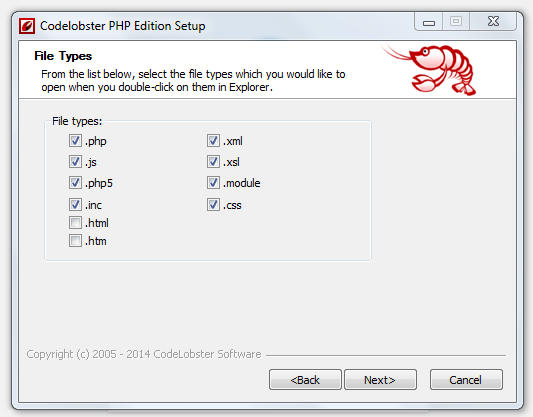
One of the first options presented to you is what file types you want to associate with CodeLobster. If you select a file, CodeLobster will become the default application for that file type.
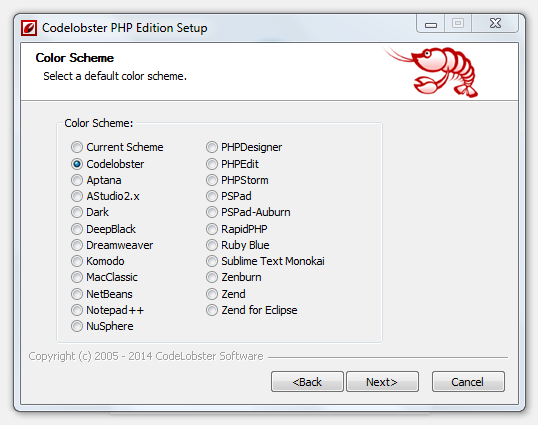
CodeLobster offers an obscene amount of colour schemes. It is not something that concerns me, however if you are switching over from another text editor or IDE, you will like the fact you can keep the same style.
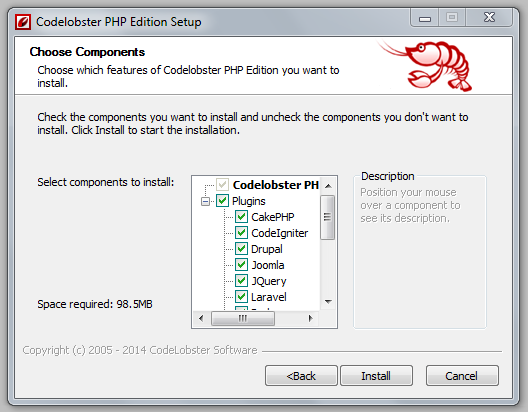
Components for popular platforms can be installed during the installation process.
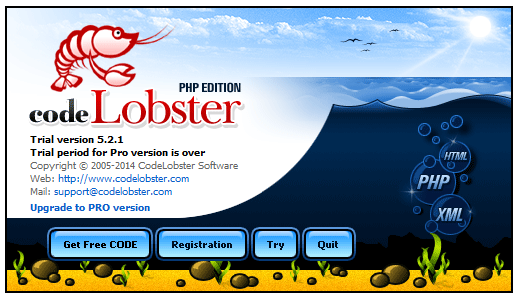
In order to use the software free of charge, you need to sign up for an account to gain an access code. This is standard procedure for software like this. What I liked about CodeLobster is that there is an option to try the software for 30 days. This allows you to test the software out before you sign up for an account.
As you know, I am not a developer, however I have tried IDE software in the past in order to debug problems.
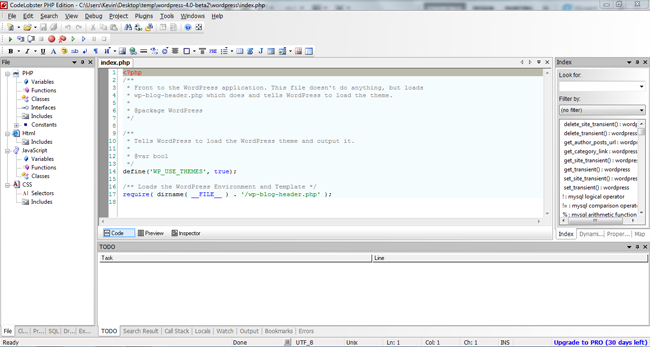
I am more accustomed to text editors for coding HTML, CSS and PHP. IDE has a similar interface, but noticeably has other panels for debugging and other things.
Advanced Features of CodeLobster
The light version of CodeLobster retails for $39.95. Upgrading will unlock the following features:
- SQL manager
- Version Control Systems
- Code validator
- Code snippets
- Code formatting
- SASS and LESS
- Split Window, Compare
- Sorting, converting
The professional version of CodeLobster retails at $119.95. This version has everything that the lite version does, however it also contains a bundle of plugins. These include:
- CMS: Drupal, Joomla, WordPress
- PHP frameworks: CakePHP, CodeIgniter, Symfony, Yii, Laravel
- JavaScript library: JQuery, Node.js
- Smarty and Twig template engines
If you do not need access to all of the above plugins, you can purchase them individually. The cheapest plugin is jQuery, which retails at $24.95. The most expensive is for Drupal, which costs $49.95. The WordPress plugin retails at $39.95.
The WordPress plugin allows you to download the latest version of WordPress and install it at a defined location.
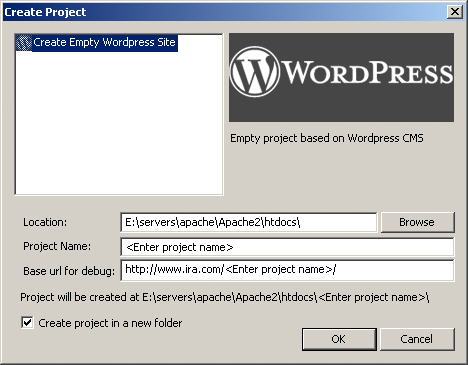
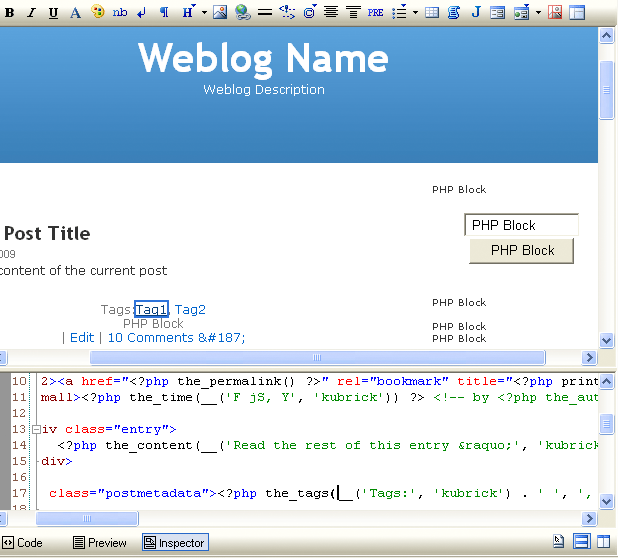
It has an autocomplete feature that allows you to write code faster. Dynamic help windows also display useful tips on elements you point at.
The WordPress theme editor allows you to edit theme files and see exactly what you are changing visually.
Final Thoughts
CodeLobster comes across as a great script. I was impressed with the fact that it can be downloaded free of charge. However, what really impressed me was the plugins that are available for it to help you code. Granted, I am not a developer, therefore this is not something I will need regularly. Though I know that tools like that can prove to be a great time saver when you are working on a project.
If you are looking for a useful way to code and debug in PHP, CSS, or Javascript, I recommend checking CodeLobster out.
Good luck,
Kevin
Thanks for the detail explanation Scott. I”ll sure give it a try and see.
Thanks again :)
Hey Jay – as far as I can tell here, it is NOT built on Eclipse. I have just switched over to CodeLobster from Aptana Studio, which IS built on Eclipse and is one of the reasons for my switch. Aptana has some bugs, is lumbering a sluggish, and uses a bunch of memory.
My experience with CodeLobster so far is that it launches faster, runs cleaner, has a lot of options, and just seems to overall behave better. My primary uses are for css, less, html, light php – primarily using it to edit Joomla websites remotely via SFTP. For this purpose it is working great.
PHP Storm, Netbeans, and many others do NOT allow you to work directly with FTP files, instead requiring your to sync them to local copies. Since I typically work on a number of Joomla sites simultaneously and need to address old sites on occasion, having local copies for every one of them is really inconvenient and unnecessary.
Further, PHP Storm IS written in Java – not built on the Eclipse frame, but on IntelliJ IDEA, which is in built on Java. It’s a cool looking piece of software, but my reasoning for getting away from Aptana really applied to PHP Storm as well.
As for Sublime Text – it’s an interesting little text editor, but it is not an IDE – it is a text editor. Also, FTP is not built in and the addon that you can get to work with FTP files is awkward to use at bets, where the FTP that is built into CodeLobster works like you would expect it to.
I definitely recommend that folks take a look at CodeLobster if they are looking to work on css, html, less, php, or javascript. It’s a great little application that runs pretty lean.
Ahhh ok. I usually just use simple text editors myself as my coding is limited to just inserting functions and tweaking existing themes and plugins.
@Kevin
Web developers mostly use sublime text editor these days. At the place I work 9-5 almost every developer use sublime.
If you are looking for an fully equipped PHP editor then I’d suggest phpstorm (https://www.jetbrains.com/phpstorm/)
Problem with Eclipse is that it’s built on Java and as the result it’s slow. But these modern IDE/editors are built on C. That’s why they are very fast. .
I didn’t realise Eclipse was such a memory hog. What are other developers using now?
Looks like it’s built on top of Eclipse? if so I wouldn’t dare to use it. Eclipse is a dying product due to it’s higher memory consumption & low performance issue.
Look at Google, even they are ditching Eclipse over Android Studio.